




12 September, 2026

The first quotation looked almost perfect.
The basket matched the mood board. The price left room for a healthy retail margin. The supplier answered quickly and promised that production would be easy. Then the sample arrived. Its shape was slightly different from the photograph, the handles felt too light for the intended use, and the carton was much larger than expected. The low product price was beginning to create a high landed cost.
This is where many sourcing projects quietly go off course. The problem is rarely a lack of beautiful products. It is the distance between an attractive idea and a repeatable commercial product.
Learning how to source handicrafts from Vietnam means learning how to close that distance. Buyers need to translate a customer need into a clear product specification, choose a material that suits the design, verify who will actually make the goods, control handmade variation, and prepare the order for a long international journey.
Vietnam offers a deep craft tradition, a broad range of natural materials, and experienced export suppliers. A Ministry of Industry and Trade article citing data from the Vietnam Craft Villages Association reported that Vietnamese handicraft exports reached nearly USD 4 billion in 2024, with woven bamboo and rattan, ceramics, wood crafts, lacquerware, and embroidery among the important product groups. The same source also emphasised that transparent origin records are increasingly important in demanding markets. Read the Ministry of Industry and Trade overview.
Opportunity, however, does not remove risk. It rewards buyers who build a clear process.
The best handicraft sourcing process does not begin with a supplier directory. It begins with the shelf, the room, or the customer you want the product to serve. From there, each decision should create a record that guides the next one.
| Step | Main decision | Evidence to keep |
|---|---|---|
| 1 | Define the market, price, and customer | Commercial brief and target cost |
| 2 | Choose the right material | Material specification and origin information |
| 3 | Prepare the product specification | Controlled specification with revision date |
| 4 | Find and verify the manufacturer | Legal, production, and quality evidence |
| 5 | Request comparable quotations | Completed quotation template |
| 6 | Develop and approve the sample | Signed master sample and approval record |
| 7 | Agree on handmade tolerances | Written defect and tolerance standard |
| 8 | Inspect during production | Inspection reports and corrective actions |
| 9 | Control moisture and packaging | Moisture records and approved packing method |
| 10 | Prepare export documents | Document checklist by market and shipment |
| 11 | Choose full or shared container freight | Landed cost and risk comparison |
| 12 | Manage claims and repeat orders | Claim record and updated order specification |
A woven planter for a premium interior store is not the same commercial product as a similar planter for a value focused garden chain. The shape may look alike, but the expected finish, packaging, testing, order volume, and acceptable variation can be very different.
Start with the customer. Where will the product be sold? What problem does it solve? What visual style must it support? Will customers touch it in a shop, receive it through online fulfilment, or use it in a hospitality setting? Is it decorative, load bearing, intended for food contact, designed for children, or combined with an electrical component?
These questions influence much more than design. They affect material choice, legal requirements, carton strength, labelling, and quality checks.
Next, work backwards from the target retail or wholesale price. Remove the margin required by your business, then account for import duty, taxes where relevant, freight, insurance, customs clearance, inland delivery, warehousing, testing, inspection, packaging, finance costs, and a reasonable defect allowance. What remains is the target purchase cost.
This calculation protects a buyer from falling in love with a factory price that cannot survive the rest of the journey.
For a new Vietnam home decor sourcing project, prepare a one page commercial brief before contacting manufacturers. It should state the target market, customer profile, target retail price, expected annual volume, launch date, destination, sales channel, quality position, and any required social or environmental standards.
This brief becomes the commercial compass for every later decision.
For a deeper cost discussion, connect this section to the future guide to MOQ and pricing for wholesale handicrafts.

Natural materials are not interchangeable decoration. Each one responds differently to structure, moisture, colour, handling, and packing.
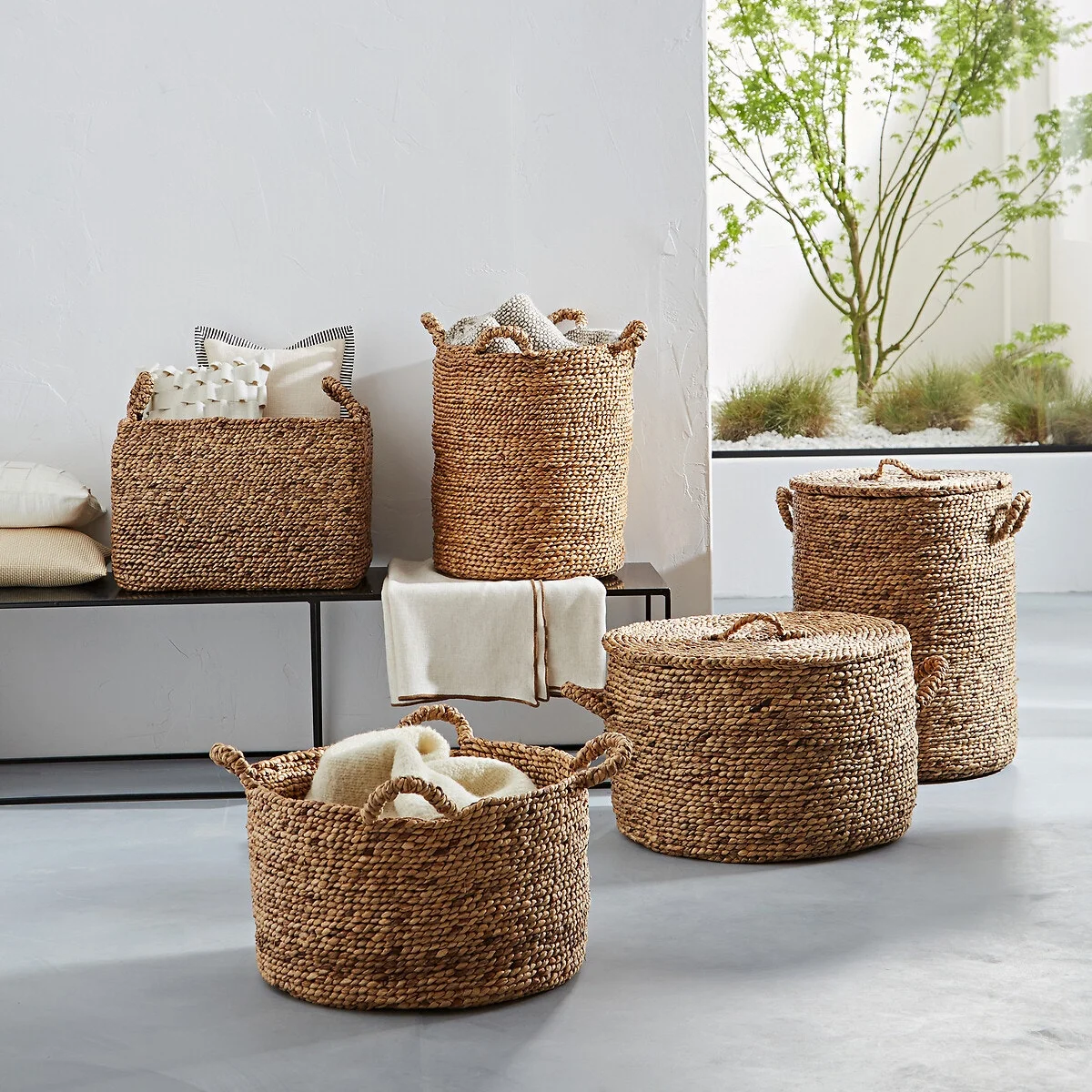
Seagrass can create a clean woven surface and works well across baskets, trays, rugs, planters, and table accessories. Its colour and texture naturally vary, so buyers should define an acceptable visual range rather than demand the uniformity of plastic.
Water hyacinth has a fuller, more sculptural appearance. It is often woven around a frame for baskets, storage pieces, planters, and furniture accents. Its volume can create a strong visual presence, but it can also increase carton size. Moisture control and nesting design therefore deserve early attention.
Rattan can support fine weaving, open patterns, curved structures, lighting, accessories, and furniture. The exact species, part of the plant, construction, and finish matter. Buyers should also request source and treatment information that supports import and traceability checks.
Bamboo is light, rigid, and versatile. It may appear as strips, poles, frames, slats, or processed components. Import conditions can depend on how the bamboo was grown, processed, and classified. For the United States, the Animal and Plant Health Inspection Service explains that declaration requirements depend on plant content, tariff classification, entry type, and other conditions. It also provides a specific exception for certain products made from cultivated bamboo. Check the current Lacey Act requirements.
Palm leaf and other plant fibres can add distinctive texture to decorative products, but they may be less suitable for designs that need precise structure or repeated heavy use.
Material selection should answer four questions:
The final answer depends on the exact construction as well as the material name. A reinforced seagrass basket may outperform a poorly designed rattan one for a particular use. Test the complete product.
Connect this section to the future buyer guide to natural handicraft materials.
A reference image can begin a conversation, but it cannot control production.
One buyer may see a soft oval basket in the image. The manufacturer may see a round basket that has changed shape during photography. One person may assume the handles are decorative. Another may assume they must safely carry ten kilograms. Both sides can believe they understood the same request.
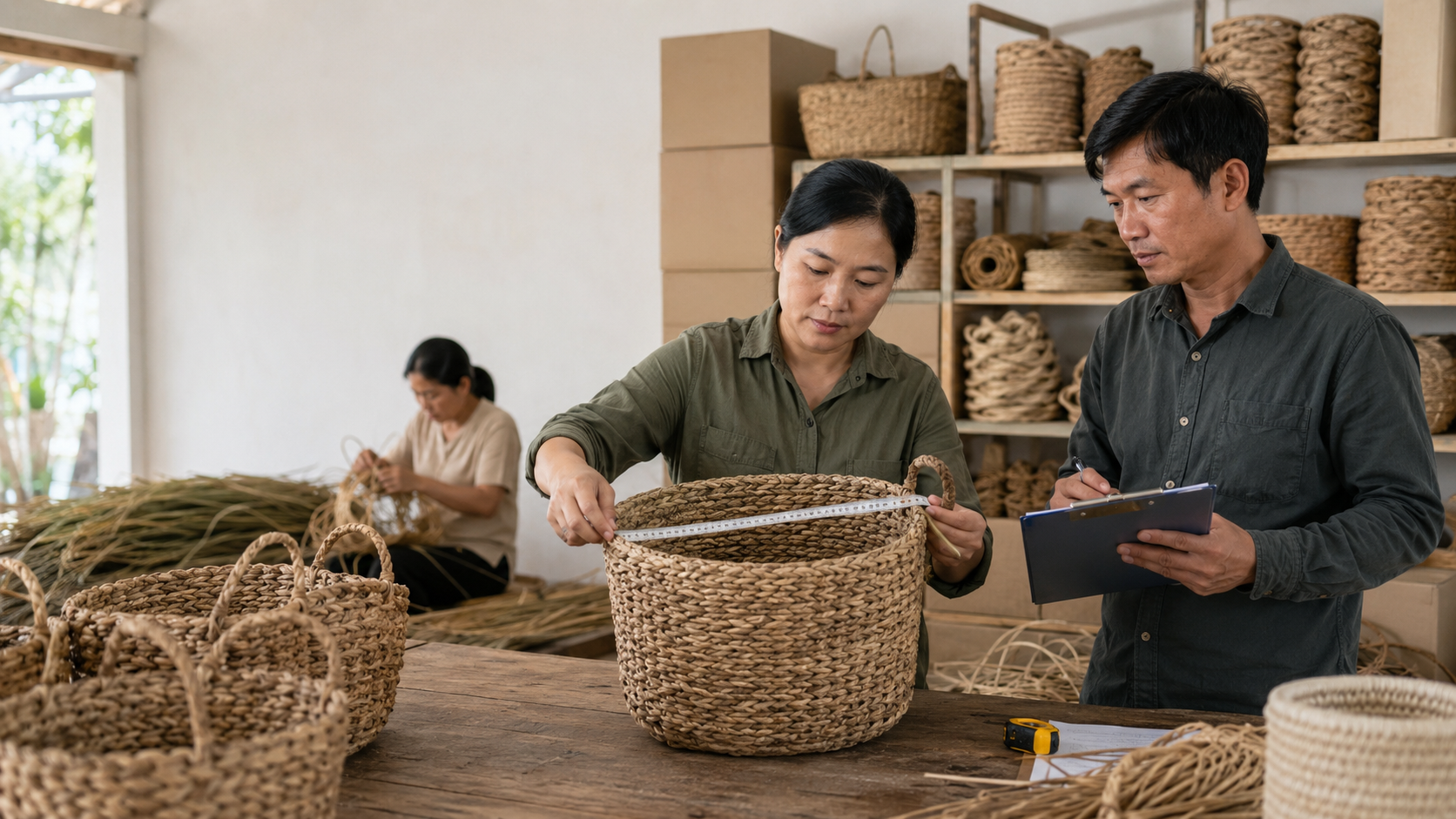
A useful product specification turns those assumptions into decisions. It should identify the product code, intended use, overall dimensions, measurement points, material, weave, internal frame, rim, handle construction, base, finish, colour reference, logo, label, barcode, unit packing, carton packing, and destination market.
Add photographs and drawings that show front, side, top, base, and important details. If the product must fit a shelf, pot, cushion, or retail fixture, include the relevant internal and external dimensions. State whether dimensions are measured while the product is relaxed, filled, or placed in a shaping frame.
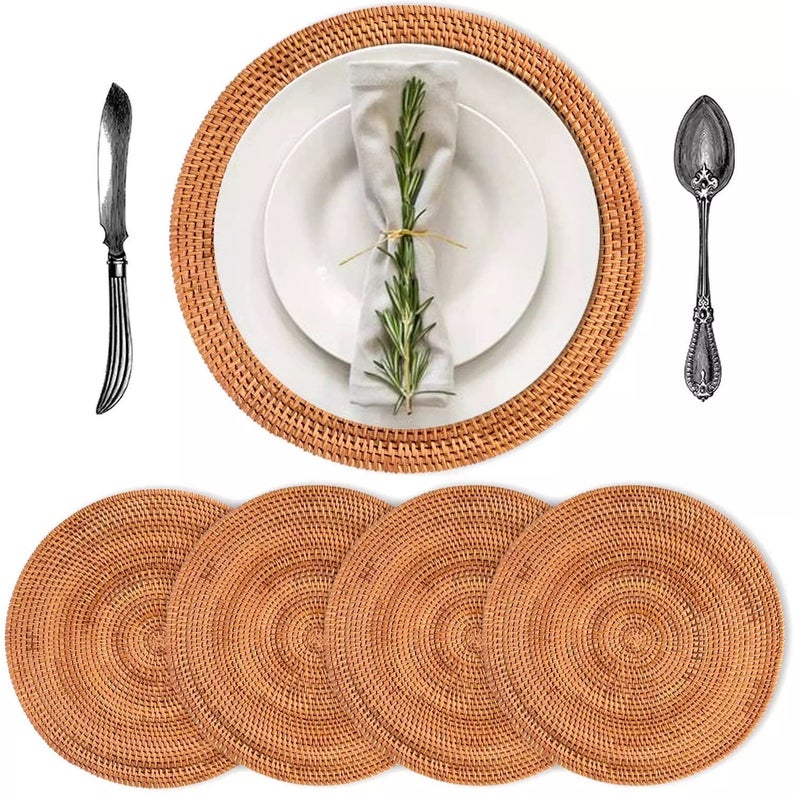
The specification should also describe performance. A handle may need a load test. A lid may need to open smoothly and sit evenly. A planter may need a liner. A lamp shade may require controlled dimensions and separate electrical compliance. A dining item may trigger material safety requirements that do not apply to decorative storage.
Give every version a date and revision number. When a comment changes the weave, colour, size, or packing, update the controlled document. Do not allow approvals to disappear into a chain of messages.
For sourcing handicrafts from Vietnam, this document is one of the strongest forms of risk control. It tells the sample maker what to develop, the costing team what to price, the production team what to make, and the inspector what to check.
Search engines, trade fairs, referrals, sourcing agents, and online business platforms can all produce supplier names. None of them completes due diligence for you.
Begin with legal identity. Request the registered company name, enterprise code, registered address, production address, legal representative, and bank beneficiary details. Vietnam maintains a National Business Registration Portal with an enterprise search function. Compare the public record with the quotation, contract, invoice, bank account, website, and factory sign.
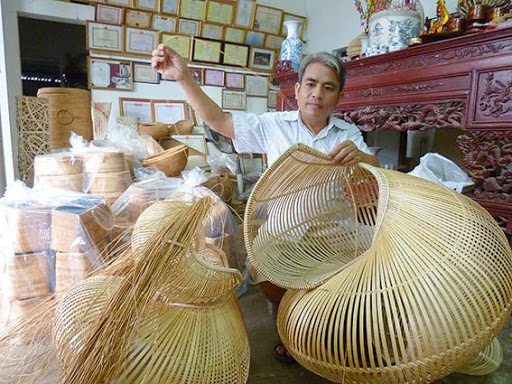
Then verify production reality. Ask which stages happen at the stated facility and which are completed by artisan households, satellite workshops, or specialist partners. Distributed production is common in handicrafts and is not automatically a weakness. The real question is who controls materials, issues instructions, inspects work, separates defects, and approves packing.
A live video tour should follow the path of an order. Look at raw material storage, preparation, frames, weaving, finishing, inspection, rejected goods, packing, and finished cartons. Ask the host to show the date and walk continuously between areas where practical. For an important order, arrange an independent factory assessment or visit.
Capability must also match your product. A supplier may be excellent at flexible seagrass baskets but inexperienced with furniture frames, lighting dimensions, fabric liners, or retail packaging. Request recent production evidence for items with comparable material, structure, size, and quality expectations.
Finally, ask about realistic capacity. How many pieces can be produced per week for your construction? How many trained makers are available? Which steps are likely to become bottlenecks? What other orders will share the production period? A meaningful capacity answer is tied to a product and a time window, not a large number in a presentation.
Three prices are not comparable simply because they refer to the same photograph.
One supplier may quote a denser weave, thicker frame, stronger carton, and final inspection. Another may assume lighter construction and basic bulk packing. The second price appears lower because it is pricing a different product.
Send every shortlisted supplier the same specification and quotation template. Request the unit price by quantity, minimum order by design, size, and colour, sample cost, development cost, mould or frame cost, packing cost, testing cost, inspection cost, production time, payment terms, currency, quotation validity, and exclusions.
State the Incoterms rule and named place precisely. The International Chamber of Commerce explains that Incoterms rules clarify the tasks, costs, and risks allocated between seller and buyer. They do not replace the full sales contract. Review the official Incoterms overview.
A quotation marked only FOB is incomplete. Name the port. A quotation marked FCA should identify the exact delivery point. Ask who pays for inland transport, export clearance, loading, documents, and any local charges.
For bulky products such as Vietnamese woven baskets wholesale collections, request the packing calculation with the quote. Units per carton, carton dimensions, gross weight, and total cubic volume can change the commercial result more than a small difference in unit price.
Compare landed cost, not just factory cost. Also compare what remains uncertain. A slightly higher quote supported by a complete specification and realistic packing plan may be less expensive than a low quote built on assumptions.
Sampling is where a concept meets material reality.
The first sample should answer questions, not merely win approval. Does the chosen fibre hold the intended curve? Is the basket stable when empty? Can the handle carry the planned load? Does the colour work under retail lighting? Can the product nest without deformation? Does the packed unit survive handling?
Record every comment against the current specification. Use measurements and clear descriptions. Replace “make it stronger” with the exact construction change required. Replace “more natural colour” with an approved range, physical reference, or agreed set of examples.
When the sample is accepted, create a master approval record. Include the product code, revision, approval date, dimensions, material, photographs, finish, packing, approved tolerances, and signatures or written confirmation from both sides. Ideally, the buyer and manufacturer each retain a matching approved sample.
Do not assume that the sample maker will also supervise bulk production. The approved sample and specification must be clear enough for another trained person to follow.
If packaging is important, approve it as part of sampling. A beautiful basket that requires an oversized carton is not fully developed. Neither is a product that reaches the destination misshapen because nesting pressure was never tested.
Connect this section to the future guide to handicraft sample development.
Handmade character is valuable. Undefined variation is not.
A buyer who demands machine level sameness may reject the qualities that make a natural product appealing. A supplier who labels every inconsistency as handmade may leave the buyer with products that do not fit, stand, stack, or sell properly.
The solution is an agreed tolerance standard.
Separate characteristics that affect safety or function from those that affect appearance. A weak handle, exposed sharp wire, unstable base, incorrect fitting, pest evidence, or active mould may be unacceptable. Small shifts in natural tone or weave rhythm may be acceptable within an approved range.
Define how dimensions are measured and what tolerance applies. Add visual examples of acceptable and unacceptable colour variation, fibre marks, joins, gaps, symmetry, shape, and finishing. Decide whether sets are judged as individual pieces or as a coordinated group.
Classify defects according to the risk they create for your business. The labels may be critical, major, and minor, but the definitions matter more than the names. State the inspection sample size, acceptance rule, and action required when the result fails.
This conversation is easiest before production. Once hundreds of pieces exist, a vague standard becomes an argument.
Final inspection is important, but it arrives late.
If the wrong fibre shade enters production, the final inspector can document the result but cannot restore the original colour. If a frame is too narrow, later weaving may hide the cause while repeating the defect across the order.
Build quality checks around production risk.
Inspect incoming materials for type, condition, colour range, cleanliness, and dryness. Approve an initial production piece before volume increases. During production, check dimensions, construction, weave, shape, components, finish, and workmanship. Record the affected quantity and corrective action when an issue appears.
Progress photographs should show the actual order number, product code, date, and production stage. Random attractive images do not prove that the order is on schedule or within specification.
A later inspection should confirm finished quantity, workmanship, function, assortment, labels, barcodes, packing, carton marks, and documentation. The buyer can perform these checks, use the factory team, or appoint an independent inspector. Responsibility and decision rules should be agreed before the inspection date.
Quality control is most useful when it changes an outcome. Reports should therefore show who will correct the issue, how the corrected pieces will be identified, and when verification will happen.
Connect this section to the future quality control guide for handicraft importers.

Natural fibre products can look perfectly dry while still carrying risk.
Moisture may come from raw material, humid production conditions, wet floors, damp cartons, rapid packing after treatment, or condensation during transport. Chemical treatment alone cannot compensate for weak drying and storage control.
Ask the supplier to describe the complete moisture process. Where are raw materials dried and stored? When are readings taken? Which instrument and method are used? What limit has been agreed for the exact material and product? What happens to goods that exceed it?
There is no responsible universal moisture number for every handicraft. Species, construction, climate, test method, destination, and customer standard all matter. Agree the method and threshold with the manufacturer, testing partner, or qualified specialist, then record readings at defined stages.
If a treatment is used, request its name, purpose, application method, and safety data. Confirm whether it is permitted for the intended product and destination. Products that may contact food, children, pets, or skin require particular care.
Packaging should respond to the actual route. Consider abrasion, crushing, movement, nesting pressure, humidity, carton handling, warehouse stacking, and online fulfilment. Confirm unit protection, carton grade, units per carton, dividers, labels, barcode position, shipping marks, gross weight, carton dimensions, and pallet requirements where applicable.
Before shipment, inspect cartons and the loading environment for dryness, damage, odour, pests, and contamination. Desiccants or other moisture controls should support a sound process, not hide wet products.
For plant based materials, destination rules must be checked by exact commodity. The United States Department of Agriculture directs importers to its Agricultural Commodity Import Requirements database because conditions vary by commodity and country of origin. Review the current United States import guidance. Australia uses its Biosecurity Import Conditions system to show whether goods are permitted and whether supporting documents, treatment, or an import permit may be required. Check Australian conditions through BICON.
Documents should grow with the order, not begin on the day the container is booked.
A typical shipment may require a commercial invoice, packing list, transport document, certificate of origin where applicable, and insurance document depending on the agreed terms. Additional records may be needed for plant materials, wood packaging, treatments, testing, declarations, product safety, or buyer programmes.
The exact list depends on the product, tariff classification, material species, construction, country of origin, destination, end use, and shipping method. Confirm it with the importer, customs broker, freight forwarder, and relevant authority before production.
Start by agreeing the product description and tariff code. The description should be specific enough to match the goods and supporting records. For some plant declarations, scientific names, source countries, quantities, and other traceability information may be required. A generic invoice description such as “home decor” may not provide enough detail.
Check that quantities, weights, values, carton counts, addresses, marks, and product descriptions agree across documents. Small inconsistencies can trigger questions, delays, or amendment fees.
Certificate of origin requirements also deserve early attention. Vietnam introduced updated rules for certificates of origin and approved self certification under Circular 40 of 2025, effective from 1 July 2025, with processing through the eCoSys system. Read the Ministry of Industry and Trade notice.
A certificate of origin is not automatically required for every shipment, and it does not automatically create a tariff benefit. The product must satisfy the applicable origin rule, and the importer must follow the relevant preference claim process.
Buyers who plan to import handicrafts from Vietnam should treat compliance as a product development input. If the destination needs material evidence, testing, or a particular treatment, waiting until shipment can be too late.
Freight is not an administrative detail for handicrafts. It can reshape the product economics.
Full container load means goods from one shipper occupy the container. Less than container load means cargo from several shippers shares container space. Maersk provides concise definitions for full container load and less than container load.
A shared container can make sense for a smaller launch, a sample order, or a collection that does not fill a container. The buyer pays for the space used, but should also examine origin charges, consolidation, destination charges, handling, schedule, and the extra movement the cartons may experience.
A full container can become attractive when the order uses most of the available space, when bulky products can be loaded efficiently, or when the buyer wants greater control over cargo handling. It still requires a complete quote, loading plan, weight check, route review, and insurance decision.
Do not choose by cubic volume alone. Compare total landed cost, transit plan, handling points, cargo sensitivity, carton strength, delivery timing, and the consequences of delay. Ask the forwarder to quote both options on the same date and with all known origin and destination charges.
Basket design can change the answer. A small adjustment that improves nesting may reduce cubic volume enough to make a shared shipment viable. A mixed collection may use a full container well if smaller items fit safely inside larger pieces. Packing efficiency should therefore be reviewed during product development, not after production.
Connect this section to the future guide to shipping handicrafts from Vietnam.
Even a well controlled order can face a problem. The quality of the partnership becomes visible in how both sides respond.
Inspect goods promptly after arrival and record carton condition before unpacking. If damage, mould, shortage, or specification failure appears, preserve the affected products, labels, cartons, moisture readings, and photographs. Separate transport damage from production defects where evidence allows.
Send a claim that identifies the purchase order, product code, affected quantity, issue, evidence, commercial impact, and requested response date. The supplier should investigate the cause, define containment for any remaining stock, and propose corrective action. Replacement, repair, credit, refund, or another remedy should follow the contract and the verified circumstances.
Avoid solving only the visible symptom. A leaning basket may come from frame dimensions, weave tension, drying, nesting pressure, or carton compression. The next order improves only when the true cause changes the process.
Before repeating an order, review every approved element. Confirm whether the material source, dye, frame, artisan group, packaging, price, lead time, regulations, and shipping route remain the same. Update the specification and master sample when anything changes.
Repeat orders should become easier, but they should not become invisible. A short preproduction review and targeted inspection can preserve the standard while reducing unnecessary work.
Viet Anh Handicrafts is based in Ninh Binh, a region closely connected with traditional weaving. Its public company information describes product development and manufacturing with seagrass, water hyacinth, bamboo, rattan, coconut wood, and other natural materials. Buyers can learn more on the Viet Anh introduction page and explore current categories through the Viet Anh product collection.
A productive conversation begins with a clear brief. Send reference images or drawings, dimensions, intended use, material preference, quantity by product code, target market, desired delivery date, packaging expectations, testing needs, and target price where possible.
From there, the team can review feasibility, identify details that require sampling, and prepare a quotation based on clearer assumptions. For custom products, the goal is not to rush from image to price. It is to create a specification, sample, quality plan, and packing method that both sides can follow.
If you are planning a natural fibre homeware collection, contact Viet Anh with your commercial brief and product requirements to begin a focused sourcing review.
The safest way to source handicrafts from Vietnam is to make every important decision visible.
Define the customer before choosing the product. Match material to function and transport. Turn ideas into a controlled specification. Verify the people and places behind the quotation. Approve a master sample, agree on handmade tolerances, inspect during production, manage moisture, and prepare documents before shipment.
When those controls work together, craftsmanship does not need to become industrially uniform. It becomes commercially dependable.
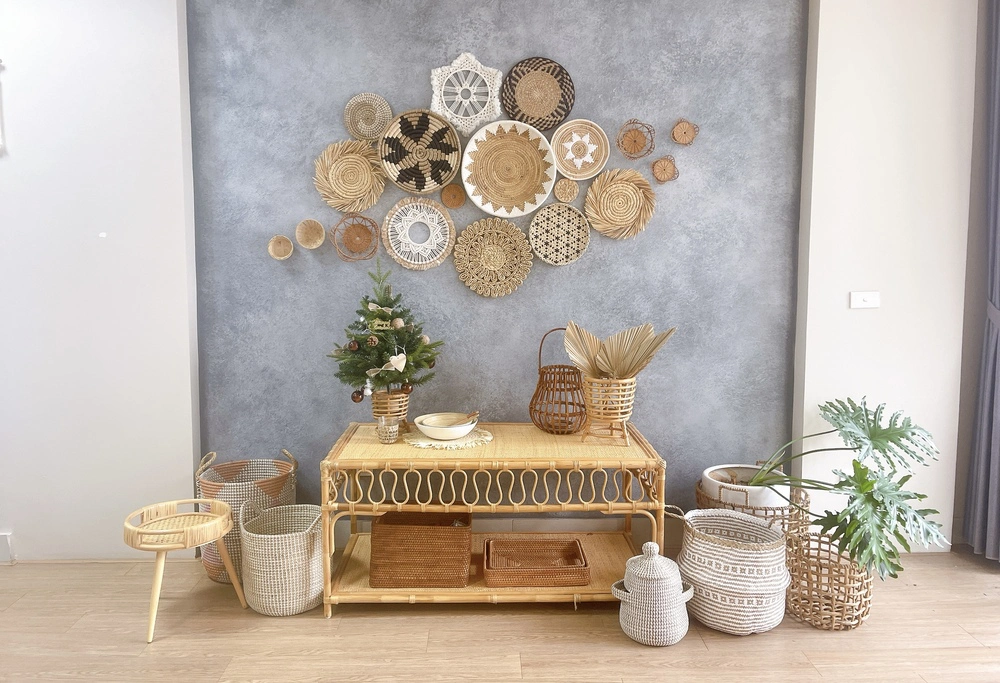
Vietnam combines established craft communities, skilled manual production, diverse natural materials, and export experience. It is particularly relevant for baskets, storage, planters, rugs, lighting, table accessories, furniture accents, and other natural fibre homeware. The best results come from matching the supplier, material, and production system to the exact product rather than choosing by country reputation alone.
Use trade fairs, referrals, online search, business directories, or a sourcing partner to build a shortlist. Then verify the legal entity, production address, bank beneficiary, actual production stages, quality system, relevant product experience, capacity, and export knowledge. A live tour, physical visit, or independent assessment can provide evidence beyond a website or catalogue.
Send a controlled product specification with dimensions, materials, construction, finish, colour, intended use, quantity by design, destination, packaging, testing needs, desired delivery date, and preferred Incoterms rule with a named place. Ask suppliers to complete the same quotation format so that cost and assumptions can be compared fairly.
There is no universal minimum order. It depends on material preparation, frame or mould requirements, colour, weave, packaging, production setup, and the quantity per design or size. Ask for the minimum by product code and the total order minimum. Also ask whether colours or sizes can share materials and whether mixed products can ship together.
Timing depends on supplier verification, sample complexity, revisions, material preparation, production capacity, inspection, and freight. Build the schedule by stage instead of relying on one promised date. A new custom collection needs more development time than a repeat order made from an unchanged specification and approved sample.
Define measurable dimensions, functional requirements, and visual tolerances before production. Approve a master sample and inspect incoming materials, initial production, work in progress, finished goods, and packing according to risk. Use photographs of acceptable and unacceptable variation so that handmade character remains visible without leaving quality undefined.
Control raw material drying, storage, production conditions, moisture measurement, treatment where appropriate, carton condition, packing timing, and loading environment. Agree on the test method and acceptable moisture level for the exact product. Do not rely only on a chemical treatment or desiccant to compensate for damp materials.
Common records may include the commercial invoice, packing list, transport document, certificate of origin where applicable, and insurance document depending on the terms. Product specific or market specific requirements may add test reports, treatment records, phytosanitary documents, plant declarations, permits, or traceability information. Confirm the final list with the customs broker and relevant authority for the destination.
Shared container freight can suit smaller volumes, while a full container can become more economical or controlled as volume increases. Compare all origin and destination charges, handling, schedule, cargo sensitivity, and total landed cost. For baskets and other bulky goods, nesting and carton design can change the decision significantly.
Many manufacturers support custom development, but capability varies by material and construction. Provide a detailed brief, expect questions, approve samples in controlled revisions, and make sure the final specification can guide bulk production. Custom design is successful when the approved appearance, function, cost, and packing can all be repeated.